

If you’re a founder starting to scale up your team, you might have faced this problem before: the knowledge of how things get done lives in one place — usually one person — and when that place changes, the work stalls. It happens when a valued team member leaves. It happens when an AI tool updates. It’s a delegation problem, a capacity bottleneck, and a documentation problem all at once.
I recently spoke to a founder who ran straight into it.
For months, she’d been working with an AI tool to create her marketing content. They went back and forth, refining the voice, the tone, the visual direction, the details that made the work feel like her brand. The posts were personable and specific. They didn’t sound like generic AI copy. The graphics felt aligned, too.
Then the tool released a new model version.
Suddenly, the content looked and sounded different. The graphics came out square and off-brand. The writing felt generic. It wasn’t anything like the work they’d built together.
She tried to correct it. Again and again.
It kept missing.
What made the experience so frustrating wasn’t only the change. It was that she had no clear brand guidelines or technical requirements to give it. The knowledge behind the good work lived in the chat: in the history of their back-and-forth, in what the tool had picked up along the way. She hadn’t saved that understanding in a document she owned.
So when the output shifted, she had no reliable foundation to return to.
Have you ever watched a process that seemed to be working suddenly stop working, and then found yourself trying to rebuild it while the work still needed to get done?
That’s the risk of relying on any technology — or any person — without documenting the system around it.
And it’s not bad luck. AI providers update their models constantly, and researchers have documented that the same AI service can behave noticeably differently from one version to the next. When a business function is built around an AI tool, a change in output can mean extra review, missed deadlines, inconsistent messaging, or a founder spending another evening trying to get the tool back on track.
The issue isn’t that AI changes.
It’s that nothing was written down.
The brand knowledge existed only inside the tool: in the history of the back-and-forth, in what it had picked up along the way. When the model changed, the understanding left with it.
This isn’t exclusive to AI, either. Many businesses feel the same frustration when a valued team member leaves, and the context and understanding of how things get done leaves with them.
Whether the work sits with an AI tool, a team member, or a contractor, the fix is the same: a brand brief.
A brand brief is your brand voice, standards, and requirements, written down in a form AI tools can actually use — and team members can audit, follow, or review. It lives in a document your organization controls: a shared file your team can find, update, and use outside a single AI conversation. The format matters less than the ownership.
The five things your brand brief needs
Include the following, and a new person or a different AI tool can do the work well:
- Real examples, not adjectives. A short statement of who you’re speaking to and what readers need to understand, plus excerpts of writing that reflect your brand voice. Examples give a tool something concrete to learn from, instead of asking it to interpret vague directions like “warm” or “professional.”
- Explicit don’ts. Name the words, phrases, tones, formats, and approaches you reject. Include examples of what feels generic or unlike your brand.
- Visual specifications. Document your colours, fonts, preferred image proportions, layout rules, and illustration style. If you use AI to generate visuals, describe what should, and shouldn’t, appear in them.
- A definition of done. Explain what makes an output ready to use. Does it need to match your voice guidelines, include a clear point, follow a particular format, and be checked by a person before publishing?
- A home outside the tool, and a way to test it. A brief only works if it lives somewhere your organization controls, not inside a chat history. Give it an owner: someone responsible for keeping it current. Then choose one standard request your team uses regularly, such as drafting a social post from an approved article, and save it alongside the brief. Run it whenever results start to feel different, and compare the new output with a previous one. Does it follow the same voice guidance? Is the format usable? Are the visual choices still aligned? You don’t need an elaborate technical evaluation to catch a noticeable change. You need a consistent way to compare results, and someone who knows what good work looks like. If the output no longer meets your standard, you can revise the instructions or try a different tool, knowing exactly what you’re trying to restore.
This isn’t about writing a perfect manual before you can create anything. It’s about getting the important knowledge out of your head and into a usable reference.

One more question: what are you sharing?
As you document, draw a line between your brand brief and your sensitive business information. Decide what data may be entered into AI tools, who can access it, and whether your organization’s security and privacy requirements are met by the account you’re using.
This is the same discipline you’d apply to client files, finances, or a process another team member needs to run. Who owns it? Where is the documentation? What happens if the tool changes or becomes unavailable?
Those questions don’t make you less innovative. They make experimentation less fragile.
The brief is the asset
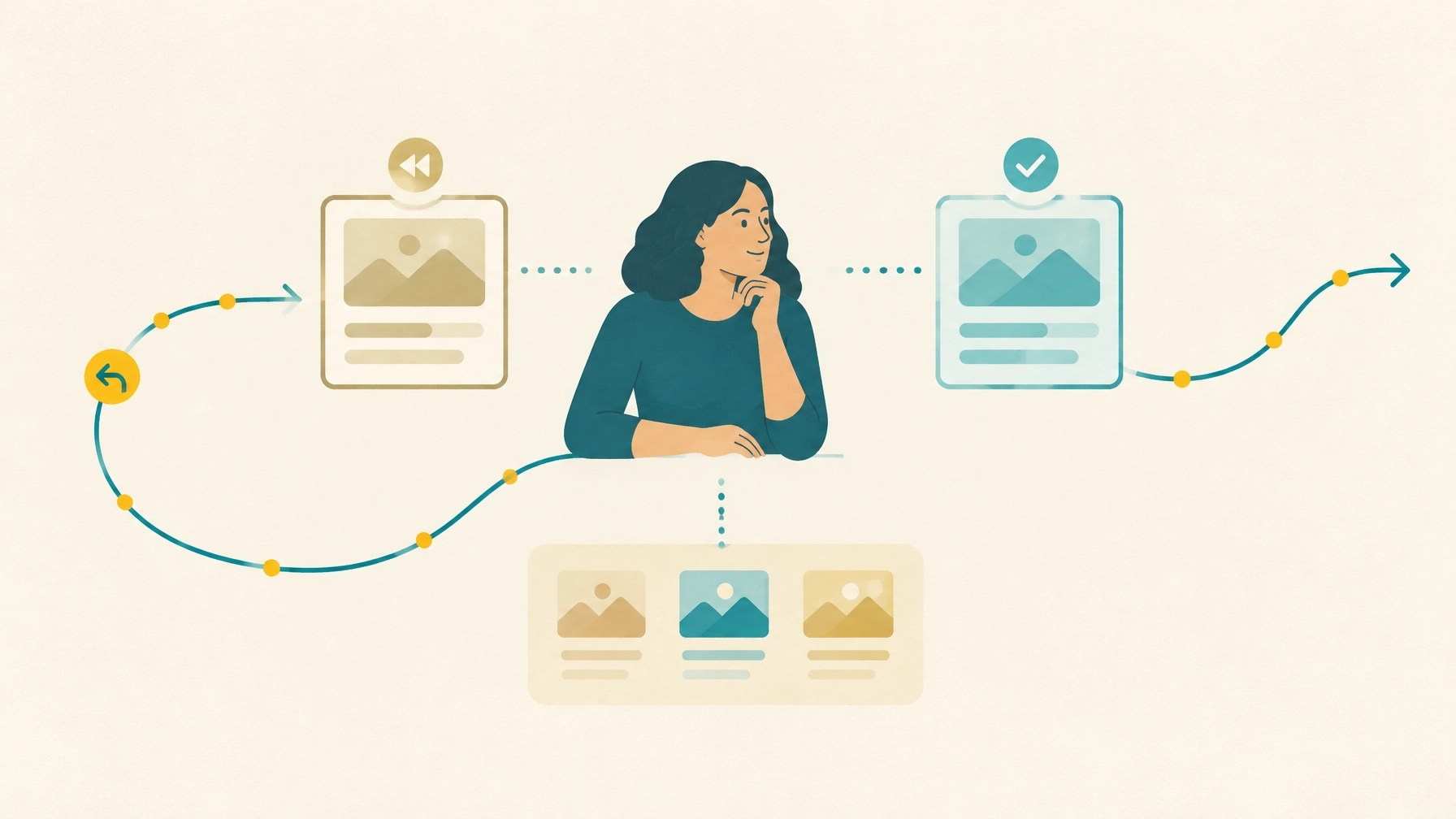
This founder’s experience was frustrating because the way of working seemed dependable, yet couldn’t be explained. That was the signal: her brand knowledge needed a home outside the tool.
AI can be a genuinely useful part of a small business workflow. But the durable asset isn’t the chat history or a particular model. It’s the understanding your organization owns: your examples, standards, choices, and safeguards.
When those are documented, a tool becomes replaceable. A new model can be tested against the same brief. A teammate can pick up the work without relying on your memory. And if the output changes, you have a standard to return to.
Here’s the part that matters most. The best practices for working well with AI — clear expectations, good examples, defined ownership, a way to check quality — are the same practices that help people do their best work. The foundation doesn’t choose between AI and humans. It lets either one step in and succeed.
Your brand shouldn’t depend on a tool remembering what makes it yours.
If your brand, systems, or processes live in one person’s head — or one tool’s chat history — every question and every revision routes back to the founder. That’s a bottleneck for the brand, for the business, and for you.
Book a discovery call to talk through what a structural fix could look like.


